
Share John Billy Van Epp's obituary with others.
Invite friends and family to read the obituary and add memories.
Stay updated
We'll notify you when service details or new memories are added.
You're now following this obituary
We'll email you when there are updates.
Select your format and elements to print

IN LOVING MEMORY OF John Billy Van Epp
John Billy
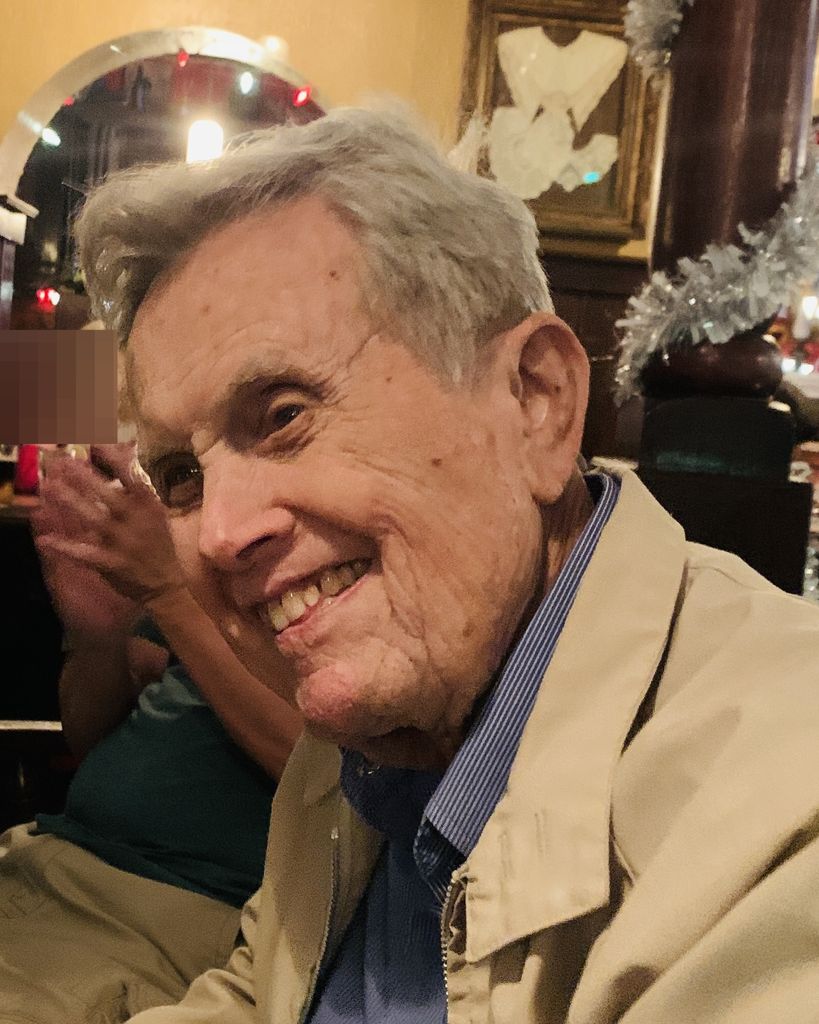
Van Epp
Nov 26, 1924 — Oct 18, 2026
Funeral Services for John Billy Van Epp
Memorial Service

Saturday
Asbury United Methodist Church
1:00 - 2:00 pm (Eastern time)
Military Honors during the beginning of the service.
John Billy Van Epp's Obituary
I am saddened to announce that one of the few remaining WWII veterans, John Billy Van Epp, passed away peacefully at home in Maitland, Florida, on October 18th, 2026, just one month shy of his 102nd birthday. He was born in Lake Worth, Florida, on November 26th, 1924.
He is preceded in death by his wife, Helen Anna Van Epp, and brother, Richard J. Van Epp.
He is survived by his son, David A. Van Epp
John, or “Bill,” as his family and friends called him, had an adventurous life from the get-go. His mother, Olive Cornelias Hildebrand, separated from his father, John Francis Ewing, shortly after his birth. In 1928, a Category 4 hurricane struck West Palm Beach, killing over 2,500 people. A tornado within the storm destroyed the family’s home. The family escaped as the walls collapsed, but during the tornado, Billy was blown from his mother’s arms and across a field, where a stranger rescued him and kept him safe until he was reunited with his family.
Early on, Bill developed a love of horticulture, shaped by time spent in his Grandfather Hildebrand’s nursery, which emphasized tropical flowering plants. He also loved aviation and spent much of his spare time building model airplanes. When he was 13, his mother married Richard Van Epp, a Great Lakes freighter ship captain who also adopted Bill as his own son. Bill then spent a lot of time in Cleveland, Ohio, where his father shipped out. During one such trip, his mother took him to see the 1937 National Air Races, and in his words, he “was in hog heaven!” He saw Jacqueline Cochran win first place in her Beechcraft, a historic first where she was also the first woman to make a blind, instrument-only landing. On the second day, his mother parked underneath a pylon, and he could look straight up and watch the planes mush as they cornered the pylon above him. During this time, he and some friends also climbed down the banks of the Rocky River, and he almost didn't make it out; he credits a friend with helping save his life that day and getting him up the muddy 90-foot steep bank.
After that summer, Bill returned to West Palm Beach with his mother, where he had a diving accident in shallow water. Years later, an MRI confirmed that he indeed had fractured vertebrae in his neck. Not to be outdone, he later dove into a canal, where he had to swim beneath water hyacinths to find a place to surface. When he did, he was face-to-face with a water moccasin; with quick thinking, he dove back under and escaped unscathed. Around the same time, in 1940, his younger brother, Richard J. Van Epp, was born
By this time, WWII had broken out. In these early years, German submarines were very active off the Florida coast, and encounters were frequent. Bill was in the Sea Scouts, and one night his Skipper was at the helm of a 40-foot private boat when a German sub surfaced and put a spotlight on them. The Skipper aimed the boat straight at the sub and charged it at full speed. Luckily, the sub dived, and disaster was averted. During the winters when the Great Lakes froze over, Bill’s father, Captain Richard Van Epp, ran a 35-foot fishing boat out of Boynton Beach Inlet, on which Bill frequently worked. One night, the Coast Guard rapidly approached them and told them to get back in, that a sub was nearby. Shortly after that encounter, Bill’s cousin was on a freighter heading north off the Florida coast when a German submarine surfaced and began shelling them. One shell hit the mast, and another hit a steam deck winch, knocking it clean off. Fortunately, the ship was able to outrun the sub and made a clean break with no casualties. During this time, the Florida coastline was littered with burnt ship parts and oil.
In 1942, at age 17, Bill decided to ship out on a Great Lakes freighter. That same year, the Federal War Shipping Administration placed the entire Great Lakes fleet under its command to support the war effort. Iron ore was in high demand to build the necessary armaments. His father, Captain Richard Van Epp, was a fleet commander, but Bill set sail on a different ship under a different captain; his father had secured the position for him. All officers were armed; the coastlines and ports were all guarded with heavy armament.
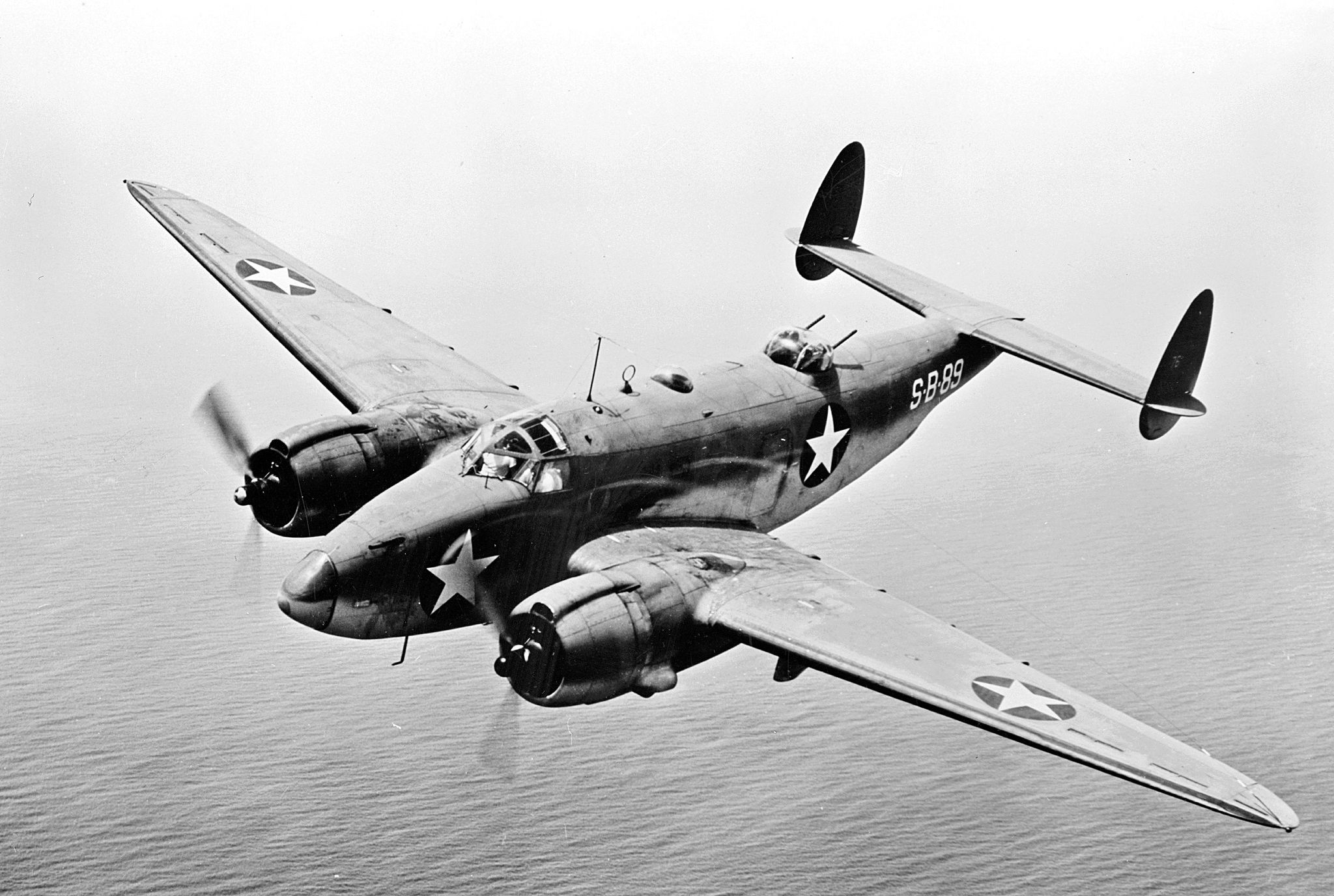
In January 1943, Bill joined the US Navy. He trained in aviation ordnance and aerial gunnery. He was then deployed to Recife, Brazil, as the top turret gunner on a PV-1 Ventura, hunting German submarines. As the war in Europe neared its end, he was sent to Norman, Oklahoma, where he trained as a side gunner on the PB4Y2 for deployment in the Pacific. Thankfully, the war ended before he was deployed, and he was honorably discharged on March 9th, 1946.
Bill was always very modest about his role in the war, instead deferring to a crew of fellow airmen on a B-17 that crashed and burned right in front of him. Or of a fellow gunner on board a bomber that lost both left engines, banked left, and then lost all lift, who parachuted from the plane to save himself, but an evacuation order had not been given, for which he was then court-martialed. Subsequently, the plane went down, and all the remaining crew members were killed. His court-martial was later overturned.
After his discharge, Bill returned to West Palm Beach and worked as a draftsman for an architect. He had studied mechanical drawing in high school, where he excelled. During that time, he also designed and built a 13-foot sailboat entirely by hand. That fall, he enrolled at the University of Florida on the GI Bill, initially studying architecture and later changing his major to horticulture. During this time, a roommate and fellow airman had an old, cloth-covered, wooden-frame two-seater aircraft, and they flew back and forth from West Palm Beach to Gainesville on weekends. One weekend night in WPB, Bill loaned his sailboat to two teenage boys, who overturned it in the middle of Lake Worth. Bill promptly swam out into the middle of the lake, helped the boys right the sailboat, and bailed out the water. He then swam back to shore, met his friend who had the plane, and joined him for a return trip to Gainesville. On the way out, they did a low pass circling over the boys in the sailboat to make sure they were all right, then continued the flight back toward campus. During the trip, they hit a huge thunderstorm and a downdraft so severe that Bill’s friend’s head went right through the fabric covering the wing overhead, tearing it all the way to the tail. They were in trouble and had to put the plane down fast, as it was literally tearing apart. They crash-landed in a farmer’s field in Groveland, completely missing a wire that crossed over the field, the existence of which they were unaware of. The farmers were astounded at their luck in evading serious damage and injury. Bill graduated from the University of Florida with a degree in horticulture in 1949. Shortly after, Bill got his own pilot's license.
In the summer of 1951, Bill went back to work on the Great Lakes aboard another iron ore freighter that was preparing to depart from the International Harvester steel yard. They began closing the large, heavy steel hatch covers when one errantly flipped back open, grazing Bill’s face. Another 1/16th of an inch further, and it would have taken his life. They took him to a hospital, where they stitched his face up. He then took a cab to another steel plant down the line, where he rejoined the crew.
In the spring of 1952, Bill met Helen Anna Farrell, whom he called his “dream girl.” They were married on April 12th, 1952, at the Methodist church in West Palm Beach, Florida. Shortly after, Bill interviewed with the vice president of the United Fruit Company. He was offered a job as a plantation manager in Honduras. Helen eventually joined him, but after 9 months, they concluded the living conditions were poor, even for the bosses. Upon returning to Florida, Bill was offered a job developing The Moorings of Naples, Florida. After many broken promises, including one to use a private plane that never materialized, they returned to WPB, where Bill resumed engineering and drafting work. During that time, they purchased 4 acres of land and started a nursery on the property called Florida Gardens. They expanded the house, which Bill designed, doing all the work themselves and using bricks from a demolished city incinerator. Through his work in the nursery industry, he was elected president of the Palm Beach County Nursery and Growers Association.
In 1964, they had a son, David. A year after, a tornado completely destroyed the nursery, but the house was left untouched. Bill then returned to the University of Florida and earned his second bachelor's degree in landscape architecture. He then worked for the Florida DOT in Fort Lauderdale, coordinating Lady Bird Johnson's Highway Beautification Act.
Within nine months, he was offered the position of Superintendent of Parks for the City of West Palm Beach. At the time, the city was experiencing the greatest population boom in South Florida's history. In addition to managing the city’s parks and infrastructure and overseeing the City’s beautification, he oversaw the Dreher Park Zoo. By the end of the 1970s, Bill had helped transform what began as a “Farm Zoo” into a formal, modern public institution. He played a key role in formalizing, building, and modernizing the entire West Palm Beach park system. This chapter of his career was his greatest source of pride, and he later retired from the city with honors.
During these years and those that followed, Bill and Helen were very active at Good Shepherd Methodist Church of WPB, which was also growing rapidly. They helped establish a Healing Prayer Ministry and were deeply dedicated to it. From 2004 to 2005, the area was hit by three hurricanes, causing substantial damage to their property. Bill, then in his 70s, had to cut down 40 large trees, many of which he had planted himself. Soon afterward, he underwent two major surgeries. Realizing that it had all become too much to manage, Bill and Helen decided to move to Maitland, FL, and sell their beloved house and property in West Palm Beach. They relocated to Maitland, FL, where they still had some family left at that time. These were good years, and they once again became very active in their local church. Sadly, Helen passed away in 2016.
Bill was able to remain in his home and active in the community until his peaceful passing at home on October 18th, 2026, one month shy of his 102nd birthday, surrounded by those who cared for him.
From his longtime family home on Cypress Avenue to his later years in the Dommerich Woods neighborhood of Maitland, John Billy Van Epp remained a West Palm Beach native, a dedicated public servant, a devout Christian, and a devoted husband and father of the Greatest Generation.
Services will be on November 14th at 1pm sharp, with military honors at Asbury United Methodist Church, 220 Horatio Ave W, Maitland, FL 32751. All are welcome to attend.
John Billy Van Epp's Guestbook
Visits: 36
This site is protected by reCAPTCHA and the
Google Privacy Policy and Terms of Service apply.
Service map data © OpenStreetMap contributors